
Pool Saturation Index Calculator: Stop Guessing Whether Your Water Is Eating Your Pool
Quick answer
A pool saturation index calculator tells you whether your water is balanced, corrosive, or scale-forming by combining pH, temperature, calcium hardness, corrected alkalinity, and TDS/salt. Aim for roughly -0.30 to +0.30, then adjust pH, alkalinity, calcium, or temperature-driven scaling risk one change at a time.
Quick answer
Pool Saturation Index Calculator: Stop Guessing Whether Your Water Is Eating Your Pool: Quick answer A pool saturation index calculator tells you whether your water is balanced, corrosive, or scale-forming by combining pH, temperature, calcium hardness, corrected alkalinity, and TDS/salt. Aim for roughly.
Your pool water is either dissolving your surfaces, scaling them up, or sitting in that sweet spot where it leaves everything alone. A pool saturation index calculator tells you which one — and it’s the single most overlooked tool in pool maintenance.
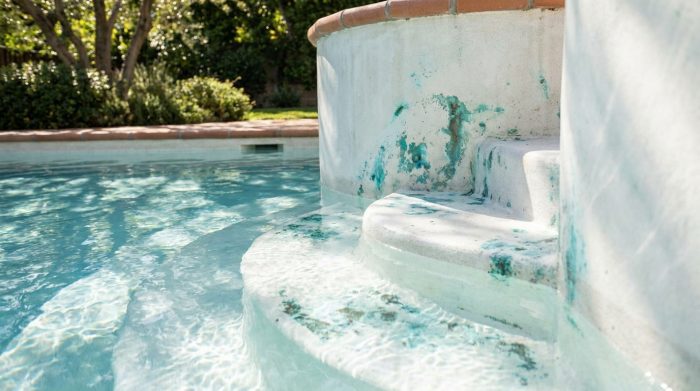
Here’s the thing: you can have perfect chlorine levels and still be slowly destroying your plaster, heater, or salt cell. The saturation index (also called the Langelier Saturation Index or LSI) measures whether your water wants to deposit calcium carbonate scale or strip it away from surfaces. Get this wrong, and you’re looking at etched plaster, pitted heater elements, or crusty white buildup on your tile line.
I’m going to walk you through exactly how to calculate your pool’s saturation index, show you real scenario examples, and — most importantly — tell you which reading to fix first when things go sideways.
What We Analyzed: Pool Saturation Index Scenario Matrix
Before we get into the details, here’s a practical calculation table showing different pool scenarios and their saturation index results. This uses the standard LSI factor method with one critical adjustment: corrected alkalinity that accounts for cyanuric acid (CYA).
Methodology
The saturation index formula adds together factors for pH, temperature, calcium hardness, and corrected alkalinity, then subtracts a TDS constant (typically 12.1 for fresh water or 12.2 for saltwater pools). The result tells you if water is corrosive (negative), balanced (near zero), or scale-forming (positive).
Critical step most calculators hide: Before selecting your alkalinity factor, subtract roughly one-third of your CYA reading from total alkalinity. At typical pool pH (7.4-7.6), about 33% of your CYA ties up alkalinity, making it unavailable for the saturation calculation.
Pool Saturation Index Scenario Table
| Scenario | pH | Temp (°F) | Calcium (ppm) | Total Alk (ppm) | CYA (ppm) | Corrected Alk (ppm) | TDS/Salt | Estimated SI | Status | First Fix |
|———-|—–|———–|—————|—————–|———–|———————|———-|————–|——–|———–|
| A: New plaster pool | 7.2 | 78 | 200 | 80 | 40 | 67 | Fresh | -0.42 | Corrosive | Raise pH to 7.4-7.5 |
| B: Well-maintained pool | 7.5 | 82 | 300 | 90 | 50 | 73 | Fresh | +0.08 | Balanced | None needed |
| C: Saltwater pool, high calcium | 7.6 | 84 | 450 | 100 | 70 | 77 | 3500 ppm salt | +0.51 | Scale-forming | Lower pH to 7.4 or dilute calcium |
| D: Desert pool, hard fill water | 7.8 | 92 | 550 | 120 | 60 | 100 | Fresh | +0.89 | Heavy scaling | Lower pH immediately, then address calcium |
| E: Indoor pool, soft water | 7.4 | 80 | 150 | 70 | 0 | 70 | Fresh | -0.31 | Slightly corrosive | Add calcium hardness increaser to 250 ppm |
| F: Overstabilized pool | 7.4 | 85 | 280 | 110 | 100 | 77 | Fresh | +0.02 | Balanced | CYA is high but SI is okay |
Limitations
This table provides educational estimates, not laboratory results. Exact saturation index values vary by formula version, presence of borates, test kit accuracy, and your specific pool surface requirements. Plaster pools need slightly positive SI; vinyl and fiberglass can tolerate slightly negative. Always retest after each adjustment.
What Readings Do You Need for a Pool Saturation Index Calculator?
You’ll need six measurements to calculate your saturation index accurately. If any of these readings are stale, recalculate before you treat the water.
1. pH
This is your starting point and has the biggest impact on the final number. Test it fresh — pH readings drift if you let the sample sit. If it needs correction, use the pool pH calculator before changing calcium or alkalinity.
2. Water Temperature
Warmer water holds less calcium in solution, pushing the index toward scaling. Measure actual pool temperature, not air temperature.
3. Calcium Hardness
The amount of dissolved calcium in your water. Most test kits measure this in ppm (parts per million). Target range is typically 200-400 ppm for plaster pools, 150-250 ppm for vinyl or fiberglass. The calcium hardness calculator helps you dose calcium chloride without overshooting.
4. Total Alkalinity
Measures your water’s buffering capacity. But here’s where most pool owners mess up: you can’t use raw total alkalinity in pools with cyanuric acid. Use the alkalinity calculator for dose planning after you calculate corrected alkalinity.
5. Cyanuric Acid (CYA)
Your chlorine stabilizer. At normal pool pH, roughly one-third of your CYA “ties up” some alkalinity, making it unavailable for saturation chemistry. A pool showing 90 ppm total alkalinity with 60 ppm CYA really only has about 70 ppm of carbonate alkalinity available. If CYA is part of the problem, check the stabilizer calculator.
Corrected Alkalinity = Total Alkalinity – (CYA × 0.33)
6. TDS or Salt Level
Total dissolved solids affect the calculation slightly. Saltwater pools use a different constant than fresh water pools. For most backyard pools, use 12.1 (fresh) or 12.2 (saltwater above 3000 ppm). For salt additions, use the pool salt calculator.
A quality test kit like the Taylor K-2006 Complete Kit measures all of these except temperature. Grab a digital pool thermometer for accurate temperature readings — those floating duck thermometers aren’t precise enough for this calculation.
What Is a Good Saturation Index for Pool Water?
The ideal range depends on your pool surface, but here’s the practical breakdown:
The Balanced Zone: -0.30 to +0.30
Most pool professionals consider this the workable range. Your water isn’t aggressively attacking surfaces or depositing heavy scale.
- -0.30 to 0.00: Slightly corrosive tendency. Fine for vinyl and fiberglass. Plaster pools may etch slowly over years.
- 0.00 to +0.30: Slightly scale-forming tendency. Ideal for plaster and concrete pools. Protects the surface without visible deposits.
Warning Zones
- Below -0.50: Corrosive water. Will etch plaster, pit metal fixtures, and damage heater elements. Fix this immediately.
- Above +0.50: Scale-forming water. White crusty deposits on tile, cloudy water, reduced heater efficiency, damaged salt cells.
Surface-Specific Targets
| Pool Surface | Target SI Range |
|————–|—————–|
| Plaster/Marcite | +0.00 to +0.30 |
| Pebble/Aggregate | +0.00 to +0.30 |
| Fiberglass | -0.30 to +0.00 |
| Vinyl Liner | -0.30 to +0.00 |
| Tile (waterline) | -0.20 to +0.20 |
How to Raise Pool Saturation Index (When It’s Too Low)
Negative saturation index means corrosive water. Your pool is hungry for calcium and will steal it from wherever it can — your plaster, your heater, your metal fittings.
Step 1: Raise pH First
This is almost always your first move. Raising pH from 7.2 to 7.5 can shift your saturation index by +0.3 points. Use soda ash (sodium carbonate) for fast pH increase without dramatically affecting alkalinity.
Typical dose: 6 oz of soda ash per 10,000 gallons raises pH by about 0.2 points.
Step 2: Increase Calcium Hardness (If Below 200 ppm)
If pH is already 7.4+ and your index is still negative, add calcium chloride. This is especially common with soft fill water or after heavy rain dilution.
Typical dose: 1.25 lbs of calcium chloride per 10,000 gallons raises calcium hardness by about 10 ppm.
Step 3: Raise Alkalinity (If Below 80 ppm Corrected)
Low alkalinity contributes to a negative index. Add sodium bicarbonate (baking soda) to raise it.
Typical dose: 1.5 lbs of sodium bicarbonate per 10,000 gallons raises alkalinity by about 10 ppm.
What NOT to Do
Don’t chase all three at once. Adjust pH, retest after 4-6 hours with the pump running, recalculate your index, then decide if you need more changes. Stacking adjustments usually overcorrects.
How to Lower Pool Saturation Index (When It’s Too High)
Positive saturation index beyond +0.30 means your water wants to dump calcium scale everywhere. You’ll notice cloudy water, white deposits on tile, and reduced efficiency in heaters and salt cells.
Step 1: Lower pH First
Dropping pH from 7.8 to 7.5 can shift your index by -0.3 points. Use muriatic acid or dry acid (sodium bisulfate).
Typical dose: 1 quart of muriatic acid per 10,000 gallons lowers pH by about 0.2 points (also lowers alkalinity slightly).
Step 2: Address High Calcium (The Hard Part)
Unlike pH, you can’t chemically remove calcium from water. Your options:
- Partial drain and refill with softer water
- Dilution from normal evaporation and refill over time
- Reverse osmosis filtration (expensive but effective)
Step 3: Lower Alkalinity (If Above 120 ppm Corrected)
High alkalinity pushes the index positive. Lower it by adding acid (which drops both pH and alkalinity), then aerating to bring pH back up while leaving alkalinity lower.
The Aeration Trick
After adding acid to lower alkalinity, run a fountain, spillover, or air blower. Aeration drives off CO2 and raises pH without raising alkalinity. This lets you target lower alkalinity while keeping pH in range.
Do Saltwater Pools Need a Different Saturation Index Target?
Yes and no. The target range stays the same (-0.30 to +0.30), but saltwater pools face specific challenges:
Salt Cells Hate Scale
Salt chlorine generators are scaling magnets. The cell creates a high-pH microenvironment during operation, which accelerates calcium deposition. Running your saltwater pool at the lower end of the balanced range (+0.00 to +0.10) extends cell life.
TDS Affects the Calculation
Salt is dissolved solids. Most saturation index formulas use a TDS constant of 12.1 for fresh water and 12.2 for saltwater pools. This slightly shifts results. Many online calculators don’t account for this — they’re designed for fresh water only.
Calcium Creep
Saltwater pools often run higher calcium hardness over time because the salt cell process and evaporation concentrate minerals. Test calcium monthly, not quarterly.
Common Saturation Index Mistakes (And How to Avoid Them)
Mistake 1: Ignoring CYA Correction
If your pool has 60 ppm CYA and you’re plugging raw total alkalinity into a calculator, your saturation index is wrong. Period. Always subtract about one-third of your CYA from total alkalinity before calculating.
Mistake 2: Using Indoor Temperature
Water temperature matters, not air temperature. A pool reading 85°F calculates differently than one at 65°F. Stick a thermometer in the water, not in the shade.
Mistake 3: Testing Old Samples
pH drifts in collected samples. Test within a few minutes of collecting water, or test at the pool edge with a waterproof digital pH meter.
Mistake 4: Chasing Perfect Zero
A saturation index of exactly 0.00 isn’t necessary. Anything between -0.30 and +0.30 is fine for most pools. Don’t keep adjusting to hit a perfect zero — you’ll just create more chemistry swings.
Mistake 5: Adjusting Multiple Parameters at Once
Changed pH, calcium, and alkalinity in the same afternoon? You have no idea what actually moved your index. Adjust one factor, wait 4-6 hours with circulation running, retest, recalculate, then decide on the next move.
Putting It All Together: Your Saturation Index Checklist
- Test pH, temperature, calcium hardness, total alkalinity, and CYA
- Calculate corrected alkalinity: Total Alk – (CYA × 0.33)
- Plug values into a saturation index calculator
- Check result against your pool surface type
- If outside -0.30 to +0.30, adjust pH first
- Wait 4-6 hours, retest, recalculate
- Address calcium or alkalinity only if pH adjustment isn’t enough
FAQ
How often should I calculate my pool’s saturation index?
Monthly during swim season, plus after any major event: heavy rain, water addition, chemical shock treatments, or whenever water looks cloudy. Saltwater pools should check more frequently due to salt cell scaling concerns.
Can I use a regular LSI calculator for my pool?
Most general LSI calculators work, but they’re designed for drinking water and may not include CYA correction. Look specifically for pool saturation index calculators that ask for cyanuric acid input, or manually calculate corrected alkalinity before entering values.
My saturation index is +0.50 but my water looks fine. Should I still adjust?
Yes. Scale formation starts invisibly inside your heater, plumbing, and salt cell before you see tile deposits. A +0.50 reading means calcium is actively precipitating somewhere — it just hasn’t become visible yet. Lower pH to bring the index below +0.30.
Does pool temperature really affect saturation index that much?
Absolutely. The same pool chemistry at 65°F versus 95°F can show a 0.3-point difference in saturation index. Hot summer water pushes toward scaling; cool water shifts toward corrosive. Recalculate when seasons change or after significant temperature swings.
What’s the fastest way to lower saturation index in an emergency?
Add muriatic acid to drop pH. One quart per 10,000 gallons typically lowers pH by 0.2 points and shifts saturation index by roughly -0.2 points. Distribute acid around the pool with the pump running, wait one hour, retest, and repeat if needed. This buys you time while you address underlying calcium or alkalinity issues.
Sources
- Orenda Technologies: Understanding the Langelier Saturation Index — Detailed explanation of LSI factors and pool-specific calculations
- Lenntech Langelier Saturation Index Calculator — Input breakdown and factor tables for LSI calculations
- Taylor Technologies: Basic Pool Water Chemistry Reference — Industry-standard chemistry guidelines and saturation index fundamentals
Stop Guessing, Start Calculating
Balanced water doesn’t happen by accident. It happens when you test the right parameters, understand how they interact, and make adjustments in the right order. If you are not certain about gallons, start with the pool volume calculator, because every chemical dose depends on volume.
Ready to calculate your exact chemical doses and check your pool’s saturation index? Open the Pool Chemical Calculator app for free tools that do the math for you — including CYA-corrected alkalinity calculations that most other calculators skip.
Your pool surfaces will thank you.
Recommended pool supplies
As an Amazon Associate, Pool Chemical Calculator earns from qualifying purchases.

Raises total alkalinity so pH is less likely to bounce around after treatment.
View on Amazon
Lowers high pH and helps bring alkalinity down when used carefully.
View on Amazon
Accurate readings make every chlorine, pH, alkalinity, calcium, and CYA dose safer.
View on AmazonGet exact pool chemical doses
Pool Chemical Calculator turns your test readings, pool volume, and target levels into exact treatment amounts for chlorine, pH, alkalinity, calcium, stabilizer, salt, and more.
Open the Pool Chemical Calculator app for iOS, Android, or web.