
Boric Acid Pool Calculator: How Many Pounds Do You Need for 30-50 ppm Borates?
Quick answer
To calculate boric acid for a pool, multiply pool gallons by the borate ppm increase you want, then multiply by 0.0000477. A 10,000-gallon pool going from 0 to 50 ppm needs about 23.9 pounds of boric acid; a 20,000-gallon pool needs about 47.7 pounds. Add only 75-80% of the calculated dose first, circulate for 24 hours, then retest before adding the rest.
Quick answer
Boric Acid Pool Calculator: How Many Pounds Do You Need for 30-50 ppm Borates?: Quick answer To calculate boric acid for a pool, multiply pool gallons by the borate ppm increase you want, then multiply by 0.0000477. A 10,000-gallon pool going from 0 to 50 ppm needs about 23.9 pounds of boric acid.
Adding boric acid to your pool isn’t complicated — but getting the dose right matters. A boric acid pool calculator takes the guesswork out of raising your pool’s borate level into that sweet spot of 30-50 ppm, where you’ll see smoother water, less pH drift, and better algae resistance. The problem? Most articles tell you borates are great but skip the actual math. You’re left staring at a bag of white powder wondering how much to dump in.
I’ll fix that right now. Below you’ll find a ready-to-use dose matrix, a clear formula you can run yourself, and a step-by-step process that keeps your pH and alkalinity in check. We’ll also settle the boric acid vs. borax debate once and for all, and cover what pet and child safety actually looks like when you’re handling this stuff.
What We Analyzed: Boric Acid Dose Matrix by Pool Size
Before we get into the why, here’s the what. I built this table using a reproducible formula so you can verify the numbers yourself.
The Formula
Pounds of boric acid = Pool gallons × Desired ppm increase × 0.0000477
That factor (0.0000477) comes from boric acid being approximately 17.5% boron by weight. Pool borate readings track boron concentration, so this conversion bridges the gap between what you pour in and what your test strips read.
Dose Matrix: Pounds of Boric Acid Needed
| Pool Size (gallons) | Current Borates | Target Borates | ppm Increase | Boric Acid Needed |
|———————|—————–|—————-|————–|——————-|
| 10,000 | 0 ppm | 30 ppm | 30 | 14.3 lbs |
| 10,000 | 0 ppm | 50 ppm | 50 | 23.9 lbs |
| 15,000 | 0 ppm | 30 ppm | 30 | 21.5 lbs |
| 15,000 | 20 ppm | 50 ppm | 30 | 21.5 lbs |
| 20,000 | 0 ppm | 30 ppm | 30 | 28.6 lbs |
| 20,000 | 0 ppm | 50 ppm | 50 | 47.7 lbs |
| 25,000 | 10 ppm | 40 ppm | 30 | 35.8 lbs |
| 30,000 | 0 ppm | 50 ppm | 50 | 71.6 lbs |
Example calculation for a 20,000-gallon pool going from 0 to 50 ppm:
20,000 × 50 × 0.0000477 = 47.7 lbs
Methodology and Limitations
This isn’t lab-verified research — it’s applied chemistry based on boric acid’s known boron content. Real-world results can shift based on:
- Your actual pool volume (most homeowners overestimate by 10-20%)
- Product purity (technical-grade boric acid is typically 99%+ pure, but check your bag)
- Test strip resolution (most borate strips read in 10 ppm increments)
- How your test kit defines “borates” (some measure boron, others measure total borates)
Use this table as your starting point. Add 75-80% of the calculated dose first, circulate for 24 hours, retest, then fine-tune. You’ll avoid overshooting.
Don’t know your pool’s exact volume? Use our pool volume calculator to get an accurate number before you start.
Why Borate Levels Matter (30-50 ppm Target)
Borates act as a pH buffer in your pool water. Think of them like shock absorbers for your chemistry — they smooth out the bumps. When borates sit in that 30-50 ppm range, three things happen:
1. Your pH stops drifting as much.
Without borates, pH likes to climb. You add acid, it drops, then creeps back up. Borates slow this cycle. You’ll find yourself adding muriatic acid half as often.
2. Chlorine works more efficiently.
Stable pH means your chlorine stays in its active form (hypochlorous acid) longer. That translates to better sanitation with the same amount of chlorine. Check your current levels with our chlorine calculator.
3. Algae has a harder time getting established.
Borates interfere with algae’s ability to process carbon dioxide. It’s not a replacement for proper chlorine levels, but it’s a solid second line of defense.
Why 30-50 ppm specifically? Below 30 ppm, you won’t see much benefit. Above 50 ppm, you’re spending money without gaining anything — and some pool finishes may show etching over time at very high concentrations.
Boric Acid vs. Borax: Which Should You Use?
This is where a lot of pool owners get confused. Both products add borates. But they behave differently in your water.
Boric Acid (Orthoboric Acid, H₃BO₃)
- pH effect: Slightly acidic (lowers pH a little)
- Acid requirement: None
- Dissolving behavior: Slow to dissolve, especially in cold water
- Cost: Generally cheaper per pound
- Best for: Most pool owners who want simple math
Borax (Sodium Tetraborate, Na₂B₄O₇·10H₂O)
- pH effect: Very alkaline (raises pH significantly)
- Acid requirement: Yes — you’ll need muriatic acid to offset the pH spike
- Dissolving behavior: Dissolves quickly
- Cost: Similar to boric acid
- Best for: Pools with low pH that could use a bump up
The verdict: For most homeowners, boric acid is the easier choice. You don’t have to calculate an offsetting acid dose or buy two products. You add the boric acid, wait for it to dissolve, and you’re done.
If your pH consistently runs low (under 7.2) and you’re already adding pH-up products, borax might make sense. But that’s a minority of pools.
Pre-Treatment Checks: pH and Alkalinity First
Don’t skip this step. Adding 15-50 pounds of any chemical to your pool without checking the baseline is asking for problems.
Check #1: Alkalinity (80-120 ppm)
Total alkalinity acts as your pH anchor. If alkalinity is too low, your pH will swing wildly after adding boric acid. If it’s too high, pH will resist correction.
Test your alkalinity and adjust if needed using our alkalinity calculator. Get it into the 80-120 ppm range before you touch the boric acid bag.
Check #2: pH (7.4-7.6)
Boric acid drops pH slightly — typically 0.1-0.2 units when adding enough to raise borates by 30-50 ppm. If your pH is already at 7.2, you might end up low after the addition.
Adjust pH first using our pH calculator. Aim for 7.5-7.6 to give yourself a buffer.
Check #3: Current Borate Level
If you’ve ever added borates before (or used certain algaecides that contain them), you might not be starting from zero. Borate test strips are cheap and prevent you from overshooting.
Step-by-Step Dosing Process
Here’s the sequence that works. Follow it, and you’ll hit your target borate level without trashing your pH or creating a cloudy mess.
Step 1: Calculate Your Dose
Use the formula above or reference the matrix. For a 15,000-gallon pool going from 0 to 50 ppm:
15,000 × 50 × 0.0000477 = 35.8 lbs of boric acid
Round to 36 lbs for practical purposes. I’d recommend adding 28-30 lbs first (about 80%) and testing before adding the rest.
Step 2: Gather Your Supplies
You’ll need:
- Boric acid (technical grade, granular) — buy more than you need; it stores well
- Digital scale for accurate measurement
- Safety goggles — boric acid dust irritates eyes
- Chemical-resistant gloves
- 5-gallon bucket
- Wooden stir stick or paint mixer
Step 3: Pre-Dissolve the Boric Acid
This is critical. Boric acid dissolves slowly. If you broadcast it directly into the pool, you’ll have grainy residue sitting on your floor for days.
Fill a 5-gallon bucket with warm water from a hose or spigot. Add 2-3 lbs of boric acid at a time. Stir until fully dissolved — this takes 3-5 minutes per batch. The warmer the water, the faster it dissolves.
Step 4: Pour Around the Pool’s Perimeter
With your pump running, walk around the pool and slowly pour each dissolved bucket near the return jets. The circulation will distribute the boric acid evenly. Don’t dump it all in one spot.
Step 5: Run the Pump for 24 Hours
Full circulation ensures even distribution. You need at least two complete turnovers of your pool water before testing.
Step 6: Retest and Adjust
After 24 hours, test borates again. If you’re 5-10 ppm short of your target, calculate and add the remaining amount. If you overshot, don’t panic — borates only leave through water loss (splash-out, backwashing, drain/refill). Just don’t add more.
Step 7: Recheck pH and Alkalinity
Boric acid may have dropped your pH slightly. Test and adjust as needed.
Pet and Child Safety During Application
Here’s where vague warnings get specific. Boric acid has low toxicity compared to many pool chemicals, but “low” doesn’t mean “none.”
During Application
- Keep pets and children away from the pool deck while you’re dissolving and pouring. Boric acid powder can irritate skin, eyes, and lungs.
- Don’t let pets drink from your mixing buckets. The concentrated solution can cause stomach upset.
- Clean up any spilled powder immediately. Pets may lick it off the deck or their paws.
After the Boric Acid is Dissolved
Once boric acid is fully dissolved and circulated (give it that full 24-hour cycle), the risk profile changes dramatically.
- Swimming is safe. At 30-50 ppm, borate concentration is too low to cause irritation.
- Incidental ingestion is not a concern. A dog drinking pool water or a toddler swallowing some during swim time won’t ingest enough borates to matter. We’re talking parts per million.
- Don’t let pets drink pool water as their primary water source. This is true regardless of borates — chlorine, cyanuric acid, and other pool chemicals aren’t great for regular consumption.
Storage Safety
Store unused boric acid in its original container, sealed, in a locked cabinet away from pets and children. It looks like sugar or salt. Label it clearly.
Maintenance After Initial Treatment
Borates don’t get used up like chlorine. Once you hit your target level, maintenance is minimal.
Expect to lose borates through:
- Splash-out (kids playing, cannonballs)
- Backwashing your filter
- Water replacement after rain overflow
- Draining for winter or repairs
Typical maintenance schedule:
- Test borates monthly during swim season
- Add small top-up doses (2-5 lbs for most pools) as needed
- Retest after any major water addition
Most pool owners find they add less than 25% of their initial dose over an entire season.
Troubleshooting Common Issues
Problem: Boric acid won’t dissolve.
Solution: Your water is too cold. Use warmer water (80°F+) and smaller batches. Stir longer.
Problem: White residue on pool floor after adding.
Solution: You added undissolved powder. Brush it toward the main drain, run the pump, and wait. It’ll eventually dissolve.
Problem: pH dropped more than expected.
Solution: Your alkalinity was probably low before you started. Add baking soda to raise alkalinity, then adjust pH.
Problem: Test strips show borates way higher than calculated.
Solution: Check your pool volume — you may have overestimated. Or your test strips might be reading “total borates” differently than expected. Wait a week and retest to confirm.
Sources
- Orenda Technologies – Borates in Pool Chemistry: Detailed explanation of how borates buffer pH and interact with chlorine.
- Trouble Free Pool – Borates in Pool Wiki: Community-maintained reference with dosing guidance and product comparisons.
- Aqua Magazine – The Basics: Boric Acid and Sodium Borates: Industry publication covering application methods and benefits.
- NPIC – Boric Acid Technical Fact Sheet: Safety and toxicology information from the National Pesticide Information Center.
FAQ
How much boric acid do I need to raise borates to 50 ppm?
For a 15,000-gallon pool starting at 0 ppm, you’d need approximately 35.8 lbs of boric acid (15,000 × 50 × 0.0000477). Always add 80% of your calculated dose first, circulate for 24 hours, then test and add the remainder.
Can pets swim in a pool with borates?
Yes. Once boric acid is fully dissolved and circulated, borates at 30-50 ppm pose no health risk to pets swimming or accidentally ingesting small amounts of pool water. Just don’t let them drink pool water as their primary water source.
Is boric acid or borax better for pools?
Boric acid is easier for most pool owners because it doesn’t raise pH. Borax requires a matching dose of muriatic acid to offset the pH spike. If your pool consistently runs low pH, borax might help — but boric acid is the simpler choice for most situations.
How often do I need to add boric acid to my pool?
After the initial treatment, you’ll only need small top-ups to replace borates lost through splash-out, backwashing, or water replacement. Most pool owners add less than 25% of their initial dose over an entire season. Test monthly and adjust as needed.
Will boric acid affect my pool’s pH or alkalinity?
Boric acid is slightly acidic and typically drops pH by 0.1-0.2 units when adding enough to raise borates by 30-50 ppm. Always check pH and alkalinity before adding boric acid, and retest after the 24-hour circulation period.
Take the Guesswork Out of Pool Chemistry
Calculating boric acid doses is just one piece of balanced pool water. Track all your chemicals — chlorine, pH, alkalinity, and more — in one place.
Download the Pool Calculator app and get personalized dosing recommendations based on your exact pool size and current readings. No more math. No more guessing. Just clear, comfortable water.
Recommended pool supplies
As an Amazon Associate, Pool Chemical Calculator earns from qualifying purchases.

Accurate readings make every chlorine, pH, alkalinity, calcium, and CYA dose safer.
View on Amazon
Raises total alkalinity so pH is less likely to bounce around after treatment.
View on Amazon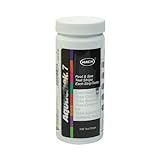
Fast daily checks between full liquid tests, especially during heavy swim season.
View on AmazonGet exact pool chemical doses
Pool Chemical Calculator turns your test readings, pool volume, and target levels into exact treatment amounts for chlorine, pH, alkalinity, calcium, stabilizer, salt, and more.
Open the Pool Chemical Calculator app for iOS, Android, or web.