
Pool Water Balance Before Closing: Exact Winter Chemistry Targets
Quick answer
Balance pool water before closing in this order: total alkalinity first, pH second, calcium hardness third, stabilizer context fourth, then shock and winter algaecide last. For most pools, close with pH at 7.4-7.6, total alkalinity at 80-120 ppm, calcium hardness matched to the pool surface, cyanuric acid around 30-50 ppm, and free chlorine raised to closing shock level after the water is clean. Use the Pool Chemical Calculator app to calculate exact doses from your pool volume instead of guessing from the bottle.
Quick answer
Pool Water Balance Before Closing: Exact Winter Chemistry Targets: Quick answer Balance pool water before closing in this order: total alkalinity first, pH second, calcium hardness third, stabilizer context fourth, then shock and winter algaecide last. For most pools, close with pH at.
If you only do one thing before winterizing, test the water with a real kit and fix pH, alkalinity, and calcium before adding shock. Shocking unbalanced water can waste chlorine, create scale, stain surfaces, or leave the pool corrosive under the cover for months.
What we analyzed: common closing balance scenarios
These examples show how different starting readings change the work before closing. The chemical amounts are practical starting estimates, not a replacement for the calculator or your product label.
Methodology: Dosage examples use common residential pool math: sodium bicarbonate to raise alkalinity, soda ash or acid to adjust pH, calcium chloride to raise calcium hardness, and liquid chlorine or cal-hypo shock for the final sanitizer boost. Actual results vary by product strength, water temperature, borates, total dissolved solids, and pool surface.
| Scenario | Pool type | Starting readings | Closing target | What to fix before closing |
|—|—:|—|—|—|
| Low alkalinity plaster pool | 18,000 gal plaster | pH 7.1, TA 55, CH 190, CYA 35 | pH 7.4-7.6, TA 90-110, CH 275-350 | Raise alkalinity first, then pH, then calcium hardness before shock |
| High pH vinyl pool | 12,000 gal vinyl | pH 8.0, TA 130, CH 180, CYA 45 | pH 7.4-7.6, TA 80-120, CH 175-225 | Lower pH carefully; do not chase extra calcium beyond vinyl range |
| Salt pool before winter | 16,000 gal fiberglass | pH 7.8, TA 75, CH 220, CYA 70 | pH 7.4-7.6, TA 80-100, CH 200-300 | Lower pH, confirm salt-cell shutdown plan, avoid adding more CYA |
| Well-water pool with metals | 20,000 gal plaster | pH 7.3, TA 90, CH 240, iron present | Balanced water plus stain control | Add metal sequestrant before shocking so chlorine does not oxidize stains |
The target ranges before you close
pH: 7.4-7.6
Close slightly high in the normal pH range. A pH of 7.4-7.6 gives the water a small buffer without making chlorine sluggish. Do not close at 7.0 or below. Acidic water can sit under the cover all winter and attack plaster, heaters, ladders, rails, and vinyl liner plasticizers.
If pH is above 7.8, lower it before closing. High pH increases the chance of scale, cloudy water, and calcium deposits during cold-weather circulation gaps.
Useful tool: Pool pH Calculator
Total alkalinity: usually 80-120 ppm
Total alkalinity controls how stable the pH is. If alkalinity is too low, pH can crash during the winter. If alkalinity is too high, pH tends to drift upward and scale becomes more likely.
For most residential pools, 80-120 ppm is the right closing range. Saltwater pools often behave better near the lower-middle end, around 80-100 ppm, because salt systems tend to push pH up during the season.
Useful tool: Alkalinity Calculator
Calcium hardness: match the pool surface
Calcium is not one-size-fits-all. The surface matters.
- Plaster, concrete, quartz, or pebble: usually 250-400 ppm
- Fiberglass: usually 200-300 ppm
- Vinyl liner: usually 175-225 ppm
Low calcium in a plaster pool can make water aggressive enough to pull minerals from the surface. High calcium in any pool can create scale, especially if pH and alkalinity are also high. If calcium is very high, do not keep adding chemicals blindly. Lower pH into range, use a scale control product if needed, and consider partial dilution if levels are extreme.
Useful tool: Calcium Hardness Calculator
Cyanuric acid: know the number before shocking
Cyanuric acid, or stabilizer, changes how chlorine behaves. For a covered winter pool, 30-50 ppm is usually enough. If CYA is 70-100+ ppm, chlorine becomes less aggressive, so the same shock dose may not sanitize as well.
Do not add stabilized chlorine products right before closing if your CYA is already high. That means be careful with dichlor and trichlor. Liquid chlorine or cal-hypo often makes more sense for the final shock, depending on your calcium level and surface.
Useful tool: Stabilizer Calculator
Free chlorine: shock after the water is balanced
Do not shock first and balance later. Chlorine works better when pH is in range, and high chlorine can interfere with some test readings. Get the core balance right, clean the pool, then raise chlorine for closing.
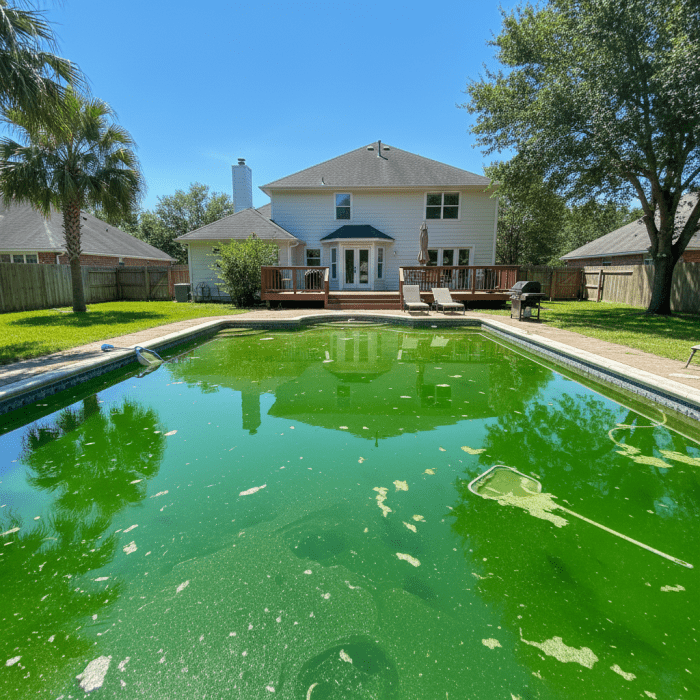
Many pools close well with free chlorine around 5-10 ppm after shock, depending on CYA, water condition, and product directions. If the water is green, cloudy, or full of debris, fix that before the cover goes on.
Useful tool: Chlorine Calculator
Step-by-step: how to balance pool water before closing
Step 1: Test with a reliable kit
Test pH, total alkalinity, calcium hardness, free chlorine, combined chlorine, and CYA. Test strips are fine for a quick screen, but a drop-based kit gives better closing decisions. If you need a dependable home kit, a Taylor-style pool test kit is worth it.
Step 2: Clean the pool before adding closing chemicals
Brush walls, steps, ladders, corners, and the waterline. Vacuum debris from the floor. Empty skimmer and pump baskets. A dirty pool consumes chlorine faster and gives algae a food source under the winter cover.
Step 3: Adjust total alkalinity first
If alkalinity is low, add sodium bicarbonate. If alkalinity is high, use acid and aeration over time rather than trying to force a huge correction in one afternoon. Circulate for several hours, then retest.
Common supply: pool alkalinity increaser
Step 4: Adjust pH after alkalinity settles
Once alkalinity is close, adjust pH to 7.4-7.6. Add acid or pH increaser slowly, circulate, and retest. Do not close with pH outside the normal range because winter water sits against surfaces and equipment for months.
Step 5: Fix calcium hardness based on surface type
Raise calcium if a plaster, concrete, pebble, or quartz pool is low. Vinyl and fiberglass pools do not need the same calcium target, so do not copy a plaster recommendation if you have a liner. Pre-dissolve calcium chloride when the label requires it and add it with the pump running.
Common supply: pool calcium hardness increaser
Step 6: Handle metals before shock
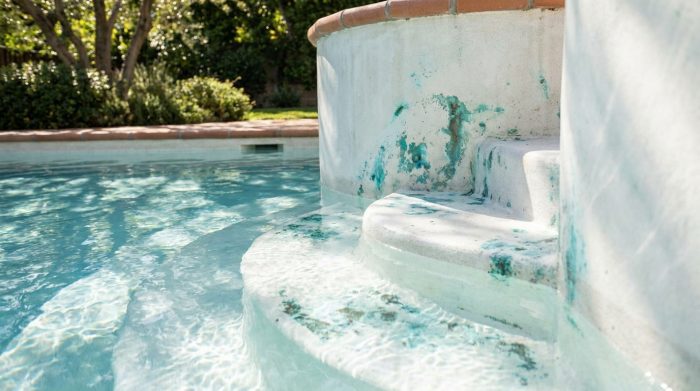
If you use well water or have seen brown, green, purple, or blue stains, treat metals before adding a large chlorine dose. Chlorine can oxidize iron and copper into visible stains. A sequestrant does not remove metals, but it can help keep them in solution through closing.
Step 7: Shock at the right time
Shock in the evening after pH is in range and the pool is clean. Run the pump long enough to circulate fully. If using cal-hypo, confirm your calcium hardness is not already too high. If using liquid chlorine, use the calculator so the dose matches your volume and current chlorine level.
Step 8: Add winter algaecide after chlorine drops
Many algaecides work poorly when chlorine is extremely high. If your winter algaecide label says to add it after shock, wait until free chlorine comes down into the product’s recommended range. Copper-free winter algaecide is usually the safer choice for stain-prone pools.
Common supply: pool closing chemical kit
Step 9: Retest before the cover goes on
Do one final test before lowering water and covering. The numbers do not need to be mathematically perfect, but they should be inside safe ranges. Save the readings in the Pool Chemical Calculator app so you know what you closed with when spring opening rolls around.
Calculator example: why pool volume matters
A 10,000-gallon pool and a 25,000-gallon pool can have the same test readings but need completely different doses. That sounds obvious, yet closing kits often make pool owners think one bag or bottle is universal.
Example: if alkalinity needs to rise by 30 ppm, a small above-ground pool might need only a few pounds of sodium bicarbonate. A large inground pool may need three times that. The same is true for pH adjustment, calcium hardness increaser, chlorine, salt, and stabilizer.
That is why the smart move is simple:
- Measure the pool volume.
- Test current readings.
- Pick the target range.
- Calculate the actual dose.
- Add in stages and retest.
Use the app here: https://poolchemicalcalculator.com/app
Affiliate disclosure: As an Amazon Associate, Pool Chemical Calculator may earn from qualifying purchases.
Common mistakes to avoid
Closing with low pH
Low pH is one of the most expensive winter mistakes. It can damage heaters, etch plaster, weaken vinyl, and corrode metal parts while nobody is looking.
Adding shock before balancing
Shock is not a substitute for balanced water. If pH, alkalinity, and calcium are wrong, shock may mask the problem for a day and leave you with scale, corrosion, or stains later.
Ignoring high CYA
If stabilizer is high, chlorine becomes less effective. Do not keep adding stabilized products if CYA is already elevated.
Using the same calcium target for every pool
Plaster needs more calcium protection than vinyl. A vinyl liner pool does not need a plaster-level calcium target.
Covering dirty water
If debris, algae dust, leaves, or cloudy water are present, the cover traps the problem. Clean first, balance second, sanitize third, cover last.
FAQ
What should pool water be balanced to before closing?
Most pools should close with pH at 7.4-7.6, total alkalinity around 80-120 ppm, cyanuric acid around 30-50 ppm, and calcium hardness matched to the pool surface. Plaster pools usually need more calcium than vinyl liner pools.
Should I balance pool water before or after shocking?
Balance first, shock second. Adjust alkalinity, pH, and calcium hardness before the final shock so chlorine works properly and the water does not sit corrosive or scale-forming under the cover.
How long should I run the pump after adding closing chemicals?
Run the pump long enough for each chemical to mix fully. Many adjustments need at least 4-8 hours of circulation, and shock is often best circulated overnight. Retest before covering when possible.
Do I need calcium hardness in a vinyl pool before closing?
Yes, but not as much as a plaster pool. Vinyl pools usually do well around 175-225 ppm. Calcium helps protect metal components, but pushing vinyl pools to plaster-level calcium can increase scale risk without much benefit.
Can I close my pool if CYA is high?
You can, but it is not ideal. High CYA reduces chlorine effectiveness. If CYA is very high, partial dilution is the real fix. If draining is not practical before winter, avoid adding more stabilized chlorine and plan for careful spring opening.
Final check before winterizing
Before the cover goes on, the pool should be clean, clear, balanced, and sanitized. If the water is still cloudy, green, foamy, or staining, fix that first. Winter does not solve water problems. It just hides them until spring.
For exact closing doses, use the Pool Chemical Calculator app. It calculates chlorine, pH, alkalinity, calcium hardness, stabilizer, salt, and more from your actual pool size and test results.
Recommended pool supplies
As an Amazon Associate, Pool Chemical Calculator earns from qualifying purchases.

Raises free chlorine quickly without adding stabilizer, which is useful when CYA is already high.
View on Amazon
Raises low pH to protect swimmers, plaster, liners, heaters, and metal equipment.
View on Amazon
Accurate readings make every chlorine, pH, alkalinity, calcium, and CYA dose safer.
View on AmazonGet exact pool chemical doses
Pool Chemical Calculator turns your test readings, pool volume, and target levels into exact treatment amounts for chlorine, pH, alkalinity, calcium, stabilizer, salt, and more.
Open the Pool Chemical Calculator app for iOS, Android, or web.