
Why Is Algaecide Not Clearing My Pool? The Real Reasons Your Water’s Still Green
Quick answer: Algaecide usually is not clearing your pool because active algae needs chlorine shock, brushing, filtration, and balanced water first. Test pH, free chlorine, cyanuric acid, and alkalinity before adding more product. Lower pH to 7.2-7.4, hold shock level until the algae dies, run the filter 24/7, then use algaecide after chlorine drops below about 5 ppm to help prevent algae from coming back.
Quick answer
Why Is Algaecide Not Clearing My Pool? The Real Reasons Your Water's Still Green: Quick answer: Algaecide usually is not clearing your pool because active algae needs chlorine shock, brushing, filtration, and balanced water first. Test pH, free chlorine, cyanuric acid, and alkalinity before adding.
You dumped algaecide in your pool three days ago. The bottle promised a crystal-clear oasis. And yet here you are, staring at water that still looks like a swamp smoothie. Frustrating, right?
Here’s the uncomfortable truth about why algaecide isn’t clearing your pool: it was never designed to clear an active algae bloom in the first place. Algaecide works best as a preventative measure, not a cure. It’s like taking vitamins after you’ve already got the flu — helpful for later, but not solving today’s problem.
But that’s just one piece of the puzzle. Your pool chemistry, filtration system, the type of algaecide you used, and even when you added it all play critical roles. Let’s figure out exactly what’s going wrong and how to actually fix it.
What We Analyzed: Your Green Pool Troubleshooting Matrix
Before we go further, I’ve built a decision framework to help you diagnose why your algaecide treatment failed. This matrix combines pool appearance, water chemistry readings, and the type of algaecide you used to pinpoint the most likely cause and recommended fix.
Methodology: This framework synthesizes information from multiple pool chemistry resources, manufacturer guidelines, and common troubleshooting scenarios. It provides general guidance based on typical pool conditions.
Limitations: Every pool is different. Water testing accuracy, equipment condition, and specific product formulations vary. Always follow your specific product’s label instructions and consider professional testing for persistent problems.
Green Pool Troubleshooting Matrix
| Pool Appearance | pH Level | Free Chlorine (ppm) | CYA (ppm) | Likely Cause | Recommended Action | Best Algaecide for Prevention |
|—————–|———-|———————|———–|————–|——————-|——————————|
| Light green, slightly cloudy | 7.8+ (high) | Below 1 | Under 50 | High pH reducing chlorine effectiveness | Lower pH to 7.2-7.4, then shock with 2 lbs cal-hypo per 10,000 gallons | Polyquat 60 (no foaming, no staining) |
| Dark green, murky | Any | 0-1 | Over 80 | High CYA locking up chlorine; algaecide can’t compensate | Partial drain (25-50%), refill, then SLAM process | Polyquat 60 after clearing |
| Green with visible slime | 7.2-7.6 | 1-3 | 30-50 | Inadequate brushing; algaecide contacted dead biofilm layer | Brush all surfaces vigorously, vacuum to waste, shock again | Copper-based for stubborn mustard algae |
| Green with brown/yellow tint | 7.2-7.6 | 3+ | 30-50 | Possible metal oxidation (copper/iron), not algae | Test for metals; use metal sequestrant, not more algaecide | None needed — address metals first |
| Cloudy white after treatment | 7.2-7.6 | 5+ | 30-50 | Algaecide overdose or incompatible with recent shock | Run filter 24/7; if quat-based, foaming is normal — it’ll dissipate | Switch to Polyquat 60 next time |
| Still green after 48 hours | Below 7.0 | Any | Any | Low pH causing chlorine to gas off rapidly | Raise pH to 7.2 before re-shocking | Any type after chemistry balanced |
How to use this matrix: Test your water first. Match your current pool appearance and test results to the closest scenario. Follow the recommended action before adding more chemicals.
The #1 Reason Algaecide Fails: Wrong Tool for the Job
Let me be blunt. If you’ve got a full-blown algae bloom — dark green water, visible growth on walls, that slimy texture — algaecide alone won’t fix it.
Chlorine shock is your primary weapon. Algaecide is backup artillery.
Think of it like this: chlorine shock is the firefighter blasting water on a burning house. Algaecide is the smoke detector you install after to prevent the next fire. Using algaecide on an active bloom is like installing a smoke detector while the flames are still going.
What Actually Kills Algae
Free chlorine at shock levels (10-30+ ppm, depending on CYA) kills algae cells. Algaecide weakens cell walls and disrupts algae growth, making it easier for chlorine to finish the job. But without adequate chlorine doing the heavy lifting, algaecide just… sits there.
The fix: Test your free chlorine. If it’s below 10 ppm during an active bloom, you need more shock — not more algaecide.
Your Water Chemistry Is Sabotaging Everything
Here’s something the algaecide bottle won’t tell you: if your water chemistry is off, no amount of product will help. And I mean significantly off.
pH: The Silent Killer of Pool Treatments
When pH climbs above 7.8, chlorine’s killing power drops dramatically. At pH 8.0, roughly 80% of your chlorine is in the weaker hypochlorite ion form. Your shock becomes about as effective as throwing salt at the algae and hoping for the best.
Target: pH between 7.2-7.4 for shock treatments. Test before adding anything.
CYA (Stabilizer): The Chlorine Lock Problem
Cyanuric acid protects chlorine from UV breakdown. Good in theory. But when CYA levels exceed 70-80 ppm, it binds up so much chlorine that almost none is available to kill algae. Your test might show 3 ppm free chlorine, but functionally, you’ve got nearly zero working for you.
The math: At CYA of 30 ppm, you need about 3-4 ppm chlorine to fight algae. At CYA of 100 ppm, you’d need 10-12 ppm to achieve the same effect. Most people don’t add nearly enough.
The fix: If your CYA is above 70 ppm, partial drain and refill is often the only practical solution. Dilution is your friend here.
Phosphates: Algae’s Favorite Snack
Phosphates don’t directly stop algaecide from working. But they’re like leaving an all-you-can-eat buffet open for algae. High phosphate levels (above 500 ppb) give algae the nutrients they need to keep reproducing, even while you’re treating.
The fix: Use a phosphate remover after you’ve killed the algae bloom. Removing the food source helps prevent the next outbreak.
A solid test kit like the Taylor K-2006 Complete Pool Test Kit measures all these parameters accurately. The cheap strips from the hardware store? They’ll get you in the ballpark, but for troubleshooting a stubborn green pool, you want precision.
You Used Algaecide at the Wrong Time
Timing matters more than most people realize. And there’s one mistake that’s incredibly common.
Adding Algaecide and Shock Together
Did you pour in shock and algaecide at the same time? Bad news: they can cancel each other out. The high chlorine from shock oxidizes and breaks down many algaecide formulas before they can work. You wasted both products.
The right sequence:
- Balance pH (7.2-7.4)
- Shock the pool
- Wait until chlorine drops to 5 ppm or below (usually 24-48 hours)
- Then add algaecide
Not Giving It Enough Time
Algaecide isn’t instant. Most products need 24-48 hours to show initial results, with full clarity taking several days of continuous filtration. If you’ve only waited 12 hours, be patient. Keep the pump running 24/7 and check again tomorrow.
You’re Using the Wrong Type of Algaecide
Not all algaecides work the same way. And using the wrong type for your situation can mean wasted money and continued green water.
Quat (Quaternary Ammonium) Algaecides
Pros: Cheap, widely available
Cons: Foam like crazy, especially in pools with high bather load. Require higher doses for tough algae. Can affect water clarity.
Best for: Routine weekly prevention in pools that rarely have problems
Polyquat 60 Algaecides
Pros: No foaming, no staining, won’t affect water clarity
Cons: More expensive
Best for: Pools with persistent issues, vinyl liners, or homes where foaming would be annoying
A quality Polyquat 60 formula like In The Swim Super Pool Algaecide costs more upfront but saves headaches.
Copper-Based Algaecides
Pros: Extremely effective against stubborn black and mustard algae
Cons: Can stain plaster and turn blonde hair green if overdosed. Don’t use with biguanide systems.
Best for: Targeted treatment of resistant algae strains, not routine use
If your pool turns green repeatedly despite normal chlorine levels, you might have mustard algae — and copper-based treatments are worth considering.
Your Filtration System Can’t Keep Up
You can dump in all the right chemicals at all the right times. But if your filter isn’t circulating water properly, dead algae just floats around making your pool cloudy — and live algae survives in dead zones where chemicals never reach.
Signs of Filtration Problems
- Water returns feel weak
- Pressure gauge reads abnormally high (dirty filter) or low (pump issue)
- Pool has areas that always seem dirtier than others
- Skimmer baskets constantly overflowing
The Fix
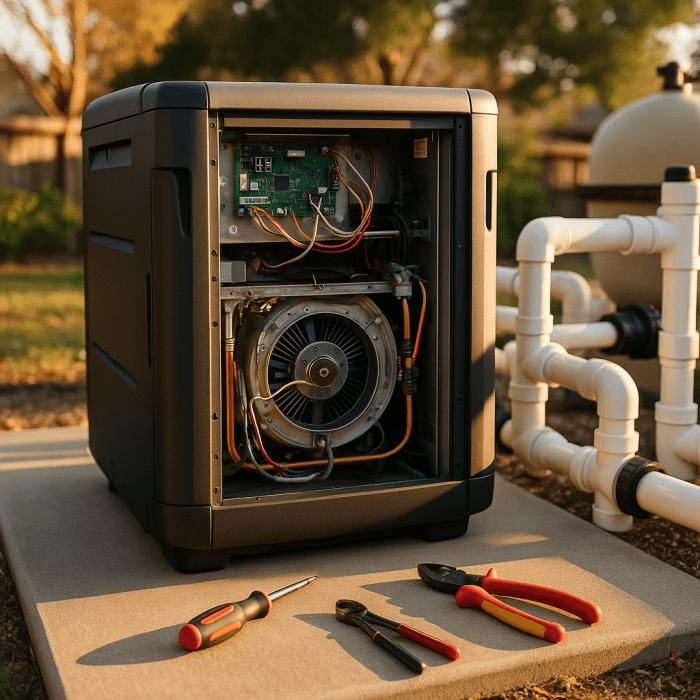
Run your pump 24 hours a day during algae treatment. Not 8 hours. Not 12. Around the clock until the water clears.
Clean or backwash your filter daily during treatment. Dead algae clogs filters fast, and a clogged filter can’t do its job.
For sand filters over 5 years old, consider replacing the sand. Worn sand doesn’t trap particles effectively.
It Might Not Be Algae At All
Here’s a twist: your green water might not actually be algae. Metals in your water — particularly copper and iron — can oxidize and turn your pool green, especially after shocking.
How to Tell the Difference
- Algae: Slimy texture on walls, organic appearance, often worse in sunny spots
- Metals: No slime, often appears after adding shock or after filling with well water, may have brown or rusty tint
If you’ve got metal-caused green water, adding more algaecide is pointless. You need a metal sequestrant instead.
Test your water for metals if your algaecide isn’t working and you don’t see obvious algae growth.
The Step-by-Step Recovery Plan
Alright, let’s put this all together. Here’s exactly what to do if your pool is still green after algaecide treatment:
Step 1: Test your water
Test pH, free chlorine, cyanuric acid, and total alkalinity at minimum. If you can, also test phosphates and metals because those can make a green pool keep coming back even after algae treatment.
Step 2: Balance pH to 7.2-7.4
Bring pH into the low 7s before shocking. Chlorine works harder at this range, and you avoid wasting shock in water that is too basic.
Step 3: Check CYA levels
If cyanuric acid is over 70 ppm, drain and refill 25-50% of the pool water before chasing the problem with more algaecide. High CYA can make normal chlorine readings too weak to kill algae.
Step 4: Brush all pool surfaces
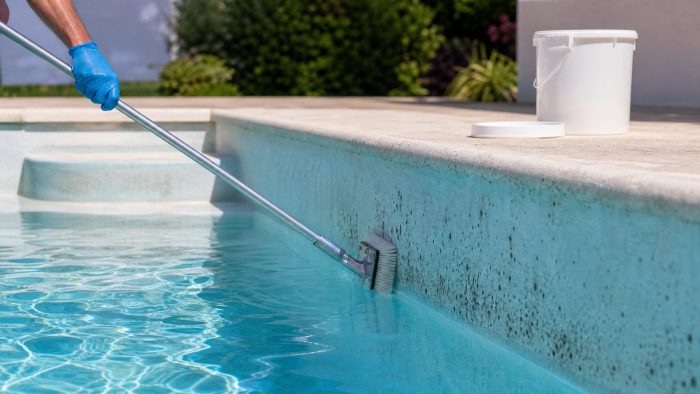
Brush the walls, floor, steps, ladders, corners, and behind lights if accessible. Brushing breaks up the protective biofilm so chlorine can reach the algae instead of skimming over it.
Step 5: Shock the pool properly
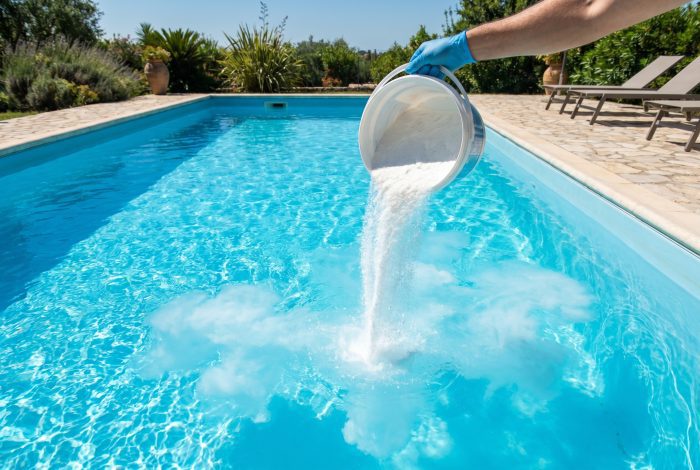
Use 2 lbs of calcium hypochlorite per 10,000 gallons for moderate algae, or 3-4 lbs per 10,000 gallons for severe blooms. Liquid chlorine also works if you calculate the dose from your actual pool volume and product strength.
Step 6: Run the filter 24/7
Keep the pump running continuously until the water clears. During cleanup, dead algae loads the filter fast, so short daily run times are not enough.
Step 7: Clean the filter daily
Backwash sand or DE filters when pressure rises, and rinse cartridge filters daily during heavy cleanup. A clogged filter lets dead algae stay suspended in the water.
Step 8: Vacuum dead algae to waste
If your system allows it, vacuum settled debris to waste instead of sending it through the filter. This removes dead algae from the pool instead of recycling fine particles.
Step 9: Retest chlorine after 24-48 hours
Keep chlorine at shock level until the algae is dead and the pool can hold chlorine overnight. If free chlorine drops fast, the pool is still consuming sanitizer.
Step 10: Add algaecide after chlorine drops to 5 ppm
Once the cleanup is done and free chlorine drops below about 5 ppm, add algaecide as a prevention dose. At that point it can help keep algae from returning instead of being destroyed by high chlorine.
FAQ: Quick Answers to Common Algaecide Questions
How long should I wait to see results after adding algaecide?
Expect initial improvement within 24-48 hours if your chlorine levels and water chemistry are correct. Full clarity typically takes 3-5 days with continuous filtration. If you see zero improvement after 48 hours, something else is wrong — usually water chemistry or filtration.
Can I add more algaecide if the first dose didn’t work?
Hold off. Adding more algaecide when the first dose failed rarely helps and can cause foaming, cloudy water, or staining. Instead, retest your water chemistry and address any imbalances. More algaecide isn’t the solution to a chemistry problem.
Do I really need algaecide, or can I just use chlorine?
Technically, you can maintain a clear pool with chlorine alone if your levels stay consistently in the 2-4 ppm range. Algaecide adds a safety margin — it prevents algae from gaining a foothold during chlorine dips (after parties, rainstorms, or missed maintenance). It’s insurance, not a requirement.
Why did my pool turn cloudy after I added algaecide?
Two common causes: You used a quat-based algaecide that foams (normal and temporary), or you overdosed. Cloudy water from foaming clears within 24-48 hours with good filtration. If you overdosed, run the filter continuously and let time dilute the excess.
What’s the best algaecide to prevent future algae problems?
For most pools, Polyquat 60 offers the best balance — effective prevention without foaming or staining. Use it weekly as part of your routine. Save copper-based algaecides for targeted treatment of stubborn mustard or black algae.
Sources
- Common Mistakes When Using Algaecide — Overview of application errors
- Why Is My Pool Still Green — Comprehensive troubleshooting guide
- Pool Algaecide Guide: Types and Uses — Comparison of algaecide formulations
- 5 Reasons Why Your Pool Is Still Green After Shocking — Post-shock troubleshooting
Get Your Pool Chemistry Right the First Time
Tired of guessing how much shock to add or whether your chemistry is balanced? Use our free Pool Chemical Calculator to get exact dosages based on your pool size and current test results. No more wasted chemicals, no more green water surprises.
Get Exact Pool Doses
Before you add more chemicals, open the Pool Chemical Calculator app to calculate pool volume, chlorine, pH, alkalinity, stabilizer, and treatment amounts from your actual test results.
Recommended pool supplies
As an Amazon Associate, Pool Chemical Calculator earns from qualifying purchases.

Helps prevent algae from returning after brushing, shocking, and correcting circulation.
View on Amazon
Accurate readings make every chlorine, pH, alkalinity, calcium, and CYA dose safer.
View on Amazon
Useful for algae cleanup, cloudy water, high bather load, and weekly oxidation routines.
View on AmazonGet exact pool chemical doses
Pool Chemical Calculator turns your test readings, pool volume, and target levels into exact treatment amounts for chlorine, pH, alkalinity, calcium, stabilizer, salt, and more.
Open the Pool Chemical Calculator app for iOS, Android, or web.