
How to Winterize a Cartridge Pool Filter: The Complete Step-by-Step Guide
What We Analyzed: Filter Cleaning Solution Comparison
Before winterizing, you need a clean cartridge. Storing a dirty filter invites mold, permanent staining, and reduced filtration when you reopen. But which cleaning solution works best?
Quick answer
How to Winterize a Cartridge Pool Filter: The Complete Step-by-Step Guide: What We Analyzed: Filter Cleaning Solution Comparison Before winterizing, you need a clean cartridge. Storing a dirty filter invites mold, permanent staining, and reduced filtration when you reopen. But which cleaning.
We compared the most common options pool owners use, weighing effectiveness, cost, safety, and soak time. Here’s what we found:
| Cleaning Solution | Dilution Ratio | Soak Time | Cost per Use | Safety Level | Best For |
|——————-|—————-|———–|————–|————–|———-|
| Commercial Filter Cleaner (e.g., BioGuard Filter Brite) | Follow label (typically 1:10 with water) | 8-12 hours | $3-5 | Moderate (wear gloves) | Heavy oil/sunscreen buildup, general deep cleaning |
| Muriatic Acid | 1:20 (acid to water) | 15-30 minutes max | $1-2 | Low (fumes, burns — use outdoors with PPE) | Mineral scale, calcium deposits |
| White Vinegar | 1:1 with water | 12-24 hours | $2-3 | High (safe to handle) | Light scale, eco-friendly option |
| TSP (Trisodium Phosphate) | 1 cup per 5 gallons water | 8-12 hours | $1-2 | Moderate (irritant) | Grease, body oils, organic matter |
| Dish Soap + Hose | A few squirts in bucket | 30 minutes | Under $1 | High | Light surface dirt, quick refresh |
Methodology: This comparison reflects commonly recommended solutions from pool industry sources, manufacturer guidelines, and experienced pool owner forums. Dilution ratios and soak times represent typical recommendations — always check your filter manufacturer’s instructions.
Limitations: We didn’t conduct independent laboratory testing. Effectiveness varies based on your water chemistry, how dirty the cartridge is, and the specific cartridge material. When in doubt, start with the gentlest option.
Bottom line: For winterization, a commercial filter cleaner handles most situations well. Got heavy calcium buildup? A quick muriatic acid dip (followed by thorough rinsing) works wonders. Just never mix chemicals, and always add acid to water — not water to acid.
Step-by-Step: How to Winterize Your Cartridge Pool Filter
Step 1: Turn Off Power and Relieve Pressure
Safety first. Shut off the pool pump at the breaker — not just the timer. Then open the air relief valve on top of your filter tank to release any trapped pressure. You’ll hear a hiss as pressure escapes.
Wait until the gauge reads zero before moving on. Opening a pressurized filter housing is dangerous.
Step 2: Drain All Water from the System
Water left in your filter system will freeze, expand, and crack the housing. This is the #1 cause of filter damage during winter.
Here’s what to drain:
- Filter tank: Remove the drain plug at the bottom. Let gravity do its work — this takes 5-10 minutes for complete drainage.
- Pump: Open the drain plugs on your pump housing and volute (the snail-shaped part).
- Hoses and pipes: Disconnect flexible hoses and let them drain. For rigid plumbing, use a shop vac or air compressor to blow out remaining water.
Pro tip: Put all your drain plugs and small parts in a zip-lock bag and tape it to the pump. You won’t spend 20 minutes searching for them in April.
Step 3: Remove the Filter Cartridge
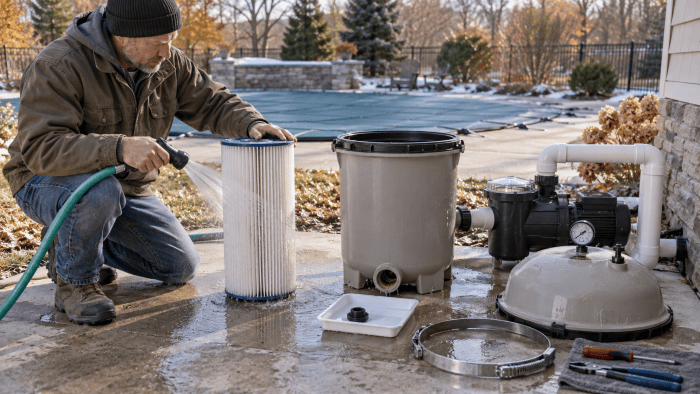
Open the filter housing by unscrewing the clamp band or lock ring (depending on your model). Lift out the cartridge carefully — it’s heavier than you’d expect when wet.
Set the cartridge aside on a clean surface. Now’s a good time to inspect the housing interior. Rinse out any debris, leaves, or sediment sitting at the bottom.
Step 4: Deep Clean the Cartridge
This is where most people cut corners. And it costs them.
A dirty cartridge stored for winter develops:
- Permanent stains that reduce flow
- Mold and mildew (that smell when you reopen)
- Accelerated fabric breakdown
Cleaning process:
- Hose it down first. Use a garden hose with a spray nozzle. Work from top to bottom, angling the spray into each pleat. This removes loose debris and surface grime.
- Soak in cleaning solution. Fill a large trash can or bucket with your chosen cleaner. A commercial filter cleaner like this one makes the job easier. Submerge the cartridge and let it soak for 8-12 hours (overnight works great).
- Rinse thoroughly. After soaking, rinse every pleat again until water runs clear. Any cleaner residue left behind can cause foaming next season.
- Check for stubborn stains. Yellow-brown discoloration usually means metals (iron or copper). Pink or reddish stains indicate algae. White crusty buildup is calcium scale. Target these with appropriate cleaners — muriatic acid for scale, a metal-specific cleaner for metals.
Need help calculating chemical doses for your pool? Use our Pool Chemical Calculator to get precise measurements based on your pool size.
Step 5: Let the Cartridge Dry Completely
This step gets skipped constantly. And it matters more than you’d think.
A damp cartridge stored in a closed container grows mold. Period.
How long does “completely dry” take?
- In warm, sunny weather: 24-48 hours
- In cool, humid conditions: 3-5 days
- In garage with limited airflow: 5-7 days
Speed up drying safely:
- Stand the cartridge upright in direct sunlight (not laying flat — water pools in the pleats)
- Place a fan nearby for airflow
- Rotate it every few hours to expose all sides
Don’t use heat guns, hair dryers on high, or place the cartridge near a heater. Excessive heat damages the polyester fabric.
Test before storing: Press firmly into several pleats in different areas. Feel any dampness? Give it another day.
Step 6: Inspect and Lubricate O-Rings
Your filter has at least one O-ring — usually on the tank lid or clamp area. Some models have several.
Remove each O-ring and inspect it:
- Cracks or dry rot? Replace it.
- Flat spots from compression? Replace it.
- Looks okay? Clean it and apply silicone lubricant.
Use only silicone-based lubricant — never petroleum jelly, WD-40, or other petroleum products. They degrade rubber rapidly. This pool and spa lubricant works perfectly and lasts for years.
Apply a thin, even coating. Store O-rings with the filter or in that zip-lock bag with your drain plugs.
Step 7: Store Everything Properly
Where you store your filter equipment determines whether it survives winter.
Ideal storage conditions:
- Temperature: Above freezing (32°F/0°C minimum)
- Humidity: Low to moderate (under 60% relative humidity)
- Environment: Dry, protected from rodents
Good storage locations:
- Heated garage
- Basement
- Climate-controlled shed
- Indoor utility room
Risky storage locations:
- Unheated shed (okay in mild climates, risky in freezing zones)
- Outdoor under a tarp (moisture collects, animals nest)
- Damp basement (mold risk)
If your only option is an unheated shed and you live where temperatures drop below 20°F, wrap the cartridge loosely in a breathable fabric (old cotton sheet works) and elevate it off the concrete floor. Moisture wicks up from cold concrete.
For the filter tank itself, leave the drain plug out and store it with the lid loosely placed (not sealed). This allows airflow and prevents trapped moisture from causing problems.
When to Replace Your Cartridge Instead of Winterizing It
Sometimes a cartridge is past saving. Cleaning won’t help, and storing it just delays the inevitable spring disappointment.
Replace your cartridge if:
- Fabric is torn, frayed, or has holes
- Pleats are crushed or permanently flattened
- Bands (top and bottom) are cracked or separating
- You’ve cleaned it thoroughly but pressure still runs high
- It’s been in service 2-3+ years with heavy use
- End caps are cracked or warped
A quality replacement cartridge like this Pleatco model typically runs $40-80 depending on your filter size. Compare that to the frustration of reopening your pool to cloudy water because your old cartridge can’t filter properly.
Spring Startup: Getting Your Filter Ready Again
When warm weather returns, don’t just throw everything back together. Take 15 minutes to do this right:
- Reinstall O-rings — check for any winter damage first
- Insert the clean, dry cartridge
- Hand-tighten the lid — never use tools on plastic fittings
- Replace drain plugs
- Prime the pump (fill with water before starting)
- Start the system and check for leaks
- Bleed air through the relief valve until water spurts
Run the filter for 24 hours, then test your water chemistry. After months of sitting, your pool will need balancing. Our Pool Chemical Calculator makes those calculations quick and accurate.
Troubleshooting Common Winterization Problems
Drain Plug Won’t Budge
Mineral buildup cements drain plugs in place. Try:
- Spray penetrating oil around the threads, wait 10 minutes
- Use channel-lock pliers with a rag (protects the plastic)
- Apply heat from a hair dryer to expand the fitting slightly
Cartridge Has Permanent Stains After Cleaning
Some stains set in. The cartridge may still function fine — stains don’t necessarily mean reduced filtration. But if pressure stays high after cleaning, the pores are clogged and it’s time for replacement.
Mold Grew During Storage
This usually means the cartridge wasn’t dry enough or storage conditions were too humid. Soak in a bleach solution (1 cup bleach per 5 gallons water) for 1-2 hours, then rinse thoroughly and let dry again.
Affiliate disclosure: As an Amazon Associate, Pool Chemical Calculator may earn from qualifying purchases.
Related Pool Chemical Calculator tools
- Use the pool volume calculator before dosing after heavy rain or spring opening.
- Use the chlorine calculator when rain dilution leaves sanitizer low.
- Use the pH calculator after pumping cover water off and reopening.
- Use the smart app link at the pool: Pool Chemical Calculator app.
Frequently Asked Questions
How do I know if my cartridge filter is truly clean enough for winter storage?
Spray water through the pleats from the inside. Water should flow freely through every section. If water pools or barely trickles through certain areas, those spots are still clogged. Re-soak and rinse until flow is even throughout.
Can I leave my cartridge filter outside in an unheated shed during winter?
It depends on your climate. In areas where temperatures stay above 25°F, an unheated shed works if the cartridge is completely dry. In colder regions, bring the cartridge indoors. The filter tank can stay in the shed if fully drained with plugs removed.
What are the risks if I don’t drain all the water from my filter tank?
Frozen water expands with tremendous force — enough to crack plastic housings, split pipe fittings, and destroy your pump impeller. Repairs typically cost $200-500 or require complete system replacement.
What kind of lubricant should I use for O-rings, and which should I avoid?
Use only 100% silicone-based lubricant. Avoid petroleum jelly, Vaseline, WD-40, motor oil, or cooking spray. Petroleum products cause rubber to swell, crack, and fail — sometimes within weeks.
How often should I replace my cartridge filter?
With proper cleaning (every 4-6 weeks during swimming season) and good winterization, cartridges last 2-3 years. Heavy-use pools or high-debris environments may need annual replacement. When cleaning no longer restores normal pressure, it’s time for a new one.
Sources
- The Pool Factory: How to Winterize Your Cartridge Filter System — Comprehensive winterization steps and storage guidance
- Family Handyman: How to Clean Pool Filter — Detailed cleaning techniques for various filter types
- Teddy Bear Pools: The Importance of Winterizing Your Pool Filter — Why proper winterization prevents costly damage
Take the Guesswork Out of Pool Care
Winterizing your filter is just one piece of pool maintenance. When you reopen next season, you’ll need to balance chemicals precisely to get your water swim-ready fast.
Use our free Pool Chemical Calculator to get exact dosing recommendations based on your pool’s size and current readings. No more guessing, no more wasted chemicals.
Recommended pool supplies
As an Amazon Associate, Pool Chemical Calculator earns from qualifying purchases.

A clean cartridge improves circulation and helps cloudy water clear faster.
View on Amazon
Accurate readings make every chlorine, pH, alkalinity, calcium, and CYA dose safer.
View on Amazon
Lowers high pH and helps bring alkalinity down when used carefully.
View on AmazonGet exact pool chemical doses
Pool Chemical Calculator turns your test readings, pool volume, and target levels into exact treatment amounts for chlorine, pH, alkalinity, calcium, stabilizer, salt, and more.
Open the Pool Chemical Calculator app for iOS, Android, or web.