
Pool Pump Run Time Calculator: Exactly How Long to Run Your Pump Every Day
Quick Answer: Divide your pool volume in gallons by your pump’s flow rate in GPM, then divide by 60 to get hours per turnover. Most pools need 1-2 turnovers per day. A 15,000-gallon pool with a 40 GPM pump needs about 6.25 hours for one turnover, or roughly 8-10 hours per day in normal summer use.
Quick answer
Pool Pump Run Time Calculator: Exactly How Long to Run Your Pump Every Day: Quick Answer: Divide your pool volume in gallons by your pump's flow rate in GPM, then divide by 60 to get hours per turnover. Most pools need 1-2 turnovers per day. A 15,000-gallon pool with a 40 GPM pump needs about.
Here is the pool pump run time calculator formula:
Pool volume gallons / pump flow GPM / 60 = hours per turnover
Then multiply that number by your daily turnover target:
- 1 turnover: light use, mild weather, covered pool
- 1.5 turnovers: normal summer use
- 2 turnovers: heavy swimming, hot weather, algae recovery, storms
Run the pump too little and you get cloudy water, algae, and uneven chlorine. Run it too long and you are just buying electricity for no reason. The right answer is not a guess. It is volume, flow rate, and real pool conditions.
Pool Pump Runtime Chart
Use this chart as a fast estimate. These numbers show how long it takes to move one full pool volume through the filter.
| Pool Size | 30 GPM | 40 GPM | 50 GPM | 60 GPM |
|———–|——–|——–|——–|——–|
| 10,000 gallons | 5.5 hours | 4.2 hours | 3.3 hours | 2.8 hours |
| 15,000 gallons | 8.3 hours | 6.25 hours | 5.0 hours | 4.2 hours |
| 20,000 gallons | 11.1 hours | 8.3 hours | 6.7 hours | 5.5 hours |
| 25,000 gallons | 13.9 hours | 10.4 hours | 8.3 hours | 6.9 hours |
For a normal summer target of 1.5 turnovers per day:
| Pool Size | 30 GPM | 40 GPM | 50 GPM | 60 GPM |
|———–|——–|——–|——–|——–|
| 10,000 gallons | 8.3 hours/day | 6.3 hours/day | 5.0 hours/day | 4.2 hours/day |
| 15,000 gallons | 12.5 hours/day | 9.4 hours/day | 7.5 hours/day | 6.3 hours/day |
| 20,000 gallons | 16.7 hours/day | 12.5 hours/day | 10.0 hours/day | 8.3 hours/day |
| 25,000 gallons | 20.8 hours/day | 15.6 hours/day | 12.5 hours/day | 10.4 hours/day |
If your chart result looks ridiculous, believe the chart. A 25,000-gallon pool at 30 GPM really does need nearly 21 hours for 1.5 turnovers. That usually means the pump is undersized, the filter is dirty, or the plumbing is choking the flow.
If you do not know your pool gallons, start with the Pool Volume Calculator. If you know gallons but not GPM, use the Flow Rate Calculator.
How to Calculate Pool Pump Runtime
Step 1: Find Your Pool Volume
Use measured dimensions instead of guessing from the pool’s label or the previous homeowner’s estimate.
For common pool shapes:
- Rectangle: length x width x average depth x 7.5 = gallons
- Round: diameter x diameter x average depth x 5.9 = gallons
- Oval: length x width x average depth x 6.7 = gallons
Example: a 16 ft x 32 ft rectangular pool with a 5 ft average depth:
16 x 32 x 5 x 7.5 = 19,200 gallons
For irregular pools, use the Pool Volume Calculator so every chlorine, pH, alkalinity, and pump calculation starts from the same gallon number.
Step 2: Find Your Actual Pump Flow Rate
The GPM printed in a pump manual is rarely the GPM your pool is actually getting. Real flow depends on pipe size, pipe length, elbows, filter condition, valves, heater resistance, and how clean the baskets are.
Typical real-world flow ranges:
- 0.75 HP pump: 30-40 GPM
- 1.0 HP pump: 40-50 GPM
- 1.5 HP pump: 50-65 GPM
- 2.0 HP pump: 60-80 GPM
For better accuracy, install an inline pool flow meter or use the Flow Rate Calculator with your measured system data.
Step 3: Calculate One Turnover
Use the formula:
Pool gallons / GPM / 60 = turnover hours
Example:
- Pool volume: 19,200 gallons
- Actual flow: 55 GPM
- Calculation: 19,200 / 55 / 60 = 5.8 hours per turnover
That means the pump needs about 5 hours and 48 minutes to move one pool volume through the system.
Step 4: Choose Your Daily Turnover Target
Use this as your starting point:
- 0.5-1 turnover: cold water, covered pool, low use
- 1 turnover: mild weather and clear water
- 1.5 turnovers: normal swimming season
- 2 turnovers: hot weather, heavy use, storm cleanup, algae prevention
- 24 hours temporarily: active algae treatment or major cleanup
For the 19,200-gallon example:
- 1 turnover = 5.8 hours
- 1.5 turnovers = 8.7 hours
- 2 turnovers = 11.6 hours
Round up. In this case, a good summer schedule is 9 hours per day.
Step 5: Set the Timer and Recheck the Water
Program your timer, then watch the pool for a week.
If water stays clear and chemistry holds, the runtime is probably right. If chlorine is disappearing fast, cloudy water returns, or debris lingers in corners, bump the runtime up by 1-2 hours and check your filter pressure.
A programmable pool timer makes this easier, especially if you want part of the runtime during off-peak electric hours.
Best Time of Day to Run a Pool Pump
The best schedule is usually a split schedule: some runtime during daylight, some runtime at night.
Chlorine breaks down fastest when the sun is on the pool. Running the pump during part of the day keeps sanitizer moving when UV exposure is highest. But many utilities charge less at night, so running the entire schedule in the afternoon can cost more than it needs to.
A practical split:
- 60% during daylight: for chemical mixing and skimming
- 40% overnight: for lower electric rates and quiet filtration
For an 8-hour daily runtime, that could be:
- 10 AM to 3 PM
- 10 PM to 1 AM
Avoid chopping runtime into too many tiny cycles. Two runs per day is fine. Four or five short runs usually makes filtration less effective because debris keeps settling between cycles.
Variable Speed Pump Runtime
Variable speed pumps change the math because lower RPM uses far less electricity, even though the pump has to run longer.
Example for a 20,000-gallon pool:
| Pump Speed | Approx. Flow | One Turnover | Typical Power |
|————|————–|————–|—————|
| High, 3,450 RPM | 70 GPM | 4.8 hours | About 1,500 watts |
| Medium, 2,400 RPM | 45 GPM | 7.4 hours | About 600 watts |
| Low, 1,200 RPM | 20 GPM | 16.7 hours | About 150 watts |
The low-speed schedule often wins. Running 16 hours at low speed can use less electricity than running 5 hours at high speed.
Good variable speed starting point:
- Run low or medium speed for 10-16 hours per day.
- Run high speed for 30-60 minutes after adding chemicals.
- Run high speed when vacuuming, backwashing, or using water features.
- Check that the skimmer still pulls enough water at low speed.
- Adjust every few days until water stays clear without wasted runtime.
The Pool Chemical Calculator app is the fastest way to keep these numbers handy while you are standing at the equipment pad.
Saltwater Pools and Pump Runtime
Salt chlorine generators only make chlorine when the pump is moving water through the cell. If your pump only runs 6 hours and your salt cell is set to 50%, you are producing chlorine for roughly 3 hours of equivalent output.
If chlorine keeps testing low in a salt pool:
- Confirm the pump runtime is long enough for turnover.
- Confirm the salt cell output percentage is high enough.
- Check salt level, CYA, water temperature, and cell cleanliness.
- Run the pump during daylight so chlorine is produced while the pool is being hit by sun.
- Use the Pool Calculator to calculate any supplemental chlorine dose.
Do not keep raising salt output forever if the real issue is low CYA, a dirty cell, or a short pump schedule.
Troubleshooting Pool Pump Runtime Problems
Cloudy Water Even Though Runtime Looks Correct
Correct runtime does not fix bad chemistry. If the pool is cloudy, test:
- Free chlorine
- Combined chlorine
- pH
- Total alkalinity
- Calcium hardness
- Cyanuric acid
A good pool test kit beats guessing. If pH is high, chlorine works poorly. If CYA is too high, chlorine can test present but still act weak. If calcium hardness is too high, the water can look dull or milky.
Also check filter pressure. If the pressure gauge is 8-10 PSI above the clean starting pressure, clean the cartridge, backwash the sand filter, or break down the DE filter. A basic filter pressure gauge is cheap and worth having.
Low Flow From the Returns
If return jets feel weak, your pump may be running enough hours but not moving enough water.
Check these in order:
- Empty skimmer baskets.
- Empty the pump basket.
- Confirm the pump lid O-ring is clean and sealed.
- Clean or backwash the filter.
- Make sure valves are fully open.
- Look for air bubbles in the pump basket.
- Check for a clogged impeller if flow stays weak.
Low flow turns a calculated 8-hour schedule into something much less effective.
High Filter Pressure
High pressure usually means water is struggling to get through the filter or return side.
Common causes:
- Dirty cartridge, sand, or DE grids
- Return valve partly closed
- Eyeball fittings too restrictive
- Heater bypass closed incorrectly
- Calcium scale in plumbing or equipment
Clean the filter first. If pressure jumps right back up, the filter may be overloaded with dead algae, oils, or scale.
Pump Runs 24/7 but Water Still Turns Green
If a pump runs all day and the pool still turns green, runtime is not the main problem.
Likely causes:
- Free chlorine is too low for the CYA level
- pH is too high
- Filter is dirty or channeling
- Phosphates and debris are feeding algae
- Circulation has dead zones
- The pool needs a real shock treatment, not just extra pump time
Use the Pool Chemical Calculator to dose chlorine based on your actual gallons and current test results.
After Rain, Parties, or Heavy Debris
Your normal schedule is for normal conditions. After a storm or heavy swimmer load, temporarily increase runtime.
Use this guide:
- Light rain: add 2 hours
- Heavy rain: run 12-24 hours and test water
- Pool party: add 2-4 hours that day and the next morning
- Visible algae: run 24 hours during treatment
- Windstorm or heavy leaves: run until baskets stop filling quickly
Pump runtime is part of cleanup, but chemistry still matters. Test before adding chemicals.
Pool Pump Runtime by Season
Summer
Most pools need 8-12 hours per day in summer. Hot water, sunlight, and swimmer load all increase chlorine demand and algae risk.
Spring and Fall
Most pools can run 6-8 hours per day when water is cooler and the pool is used less. Leaves may require extra skimming cycles.
Winter Above Freezing
Most open pools can run 4-6 hours per day in cold water. Algae grows slowly in cold water, but circulation still protects equipment and mixes sanitizer.
Freezing Weather
If the pool is not winterized and temperatures drop below freezing, freeze protection matters more than turnover math. Many systems run continuously during freeze events to protect pipes and equipment.
Common Mistakes That Waste Electricity
- Running a single-speed pump 24/7 for a clear, balanced pool
- Trusting pump horsepower instead of actual GPM
- Ignoring dirty filter pressure
- Running only at night in peak summer
- Setting a salt cell percentage without matching pump runtime
- Cutting runtime to save money while spending more on shock, clarifier, and algae treatment
- Forgetting to adjust after storms and parties
The goal is not the shortest runtime possible. The goal is the shortest runtime that keeps water clear, filtered, and chemically stable.
FAQ: Pool Pump Run Time Calculator
How many hours should I run my pool pump each day?
Most residential pools need 6-12 hours per day, depending on pool size, pump flow rate, weather, and swimmer load. Calculate one turnover first, then aim for 1-2 turnovers per day. In summer, 1.5 turnovers is a good starting target.
Is it better to run a pool pump during the day or at night?
A split schedule is usually best. Run part of the schedule during daylight for chlorine circulation and skimming, then run part at night if your electric rate is lower. Day-only can cost more, and night-only is not ideal for summer chlorine distribution.
Can I run my pool pump too long?
Yes. Running longer than needed wastes electricity and can wear equipment faster, especially on older single-speed pumps. If the water is clear, chemistry is stable, and the pool is getting 1-2 turnovers per day, more runtime usually gives little benefit.
How do I calculate pool turnover time?
Divide pool gallons by pump GPM, then divide by 60. For example, a 15,000-gallon pool at 40 GPM is 15,000 / 40 / 60 = 6.25 hours per turnover.
Why is my pool cloudy if I run the pump enough?
Cloudy water is often a chemistry or filter problem, not a runtime problem. Test chlorine, pH, alkalinity, calcium hardness, and CYA. Then check filter pressure and clean the filter if pressure is 8-10 PSI above the clean baseline.
Bottom Line
A pool pump run time calculator gives you the real starting point: pool gallons, actual GPM, and desired turnovers. From there, adjust for heat, swimmers, storms, filter condition, and your electric rates.
For exact pool volume, flow rate, turnover, and chemical dosing in one place, use the Pool Chemical Calculator tools on the web or install the smart app link here: Pool Chemical Calculator app.
Recommended pool supplies
As an Amazon Associate, Pool Chemical Calculator earns from qualifying purchases.
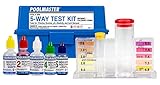
Accurate readings make every chlorine, pH, alkalinity, calcium, and CYA dose safer.
View on Amazon
Useful for algae cleanup, cloudy water, high bather load, and weekly oxidation routines.
View on Amazon
Helps small particles clump together so the filter can clear cloudy water faster.
View on AmazonGet exact pool chemical doses
Pool Chemical Calculator turns your test readings, pool volume, and target levels into exact treatment amounts for chlorine, pH, alkalinity, calcium, stabilizer, salt, and more.
Open the Pool Chemical Calculator app for iOS, Android, or web.