
Sodium Thiosulfate Pool Calculator: How to Safely Lower Your Chlorine Levels
Quick answer
Use a sodium thiosulfate pool calculator when free chlorine is too high and you need a careful neutralizer dose. Enter pool volume, current free chlorine, and target free chlorine, then add the neutralizer in partial doses, circulate, and retest before adding more.
Quick answer
Sodium Thiosulfate Pool Calculator: How to Safely Lower Your Chlorine Levels: Quick answer Use a sodium thiosulfate pool calculator when free chlorine is too high and you need a careful neutralizer dose. Enter pool volume, current free chlorine, and target free chlorine, then add the neutralizer.
Shocked your pool a little too hard? Maybe you dumped in extra chlorine before a weekend party that got rained out. Now your test kit shows chlorine levels at 8 ppm — way too high for swimming. That’s where a sodium thiosulfate pool calculator becomes your best friend. This chemical neutralizes chlorine fast, but getting the dosage wrong can create bigger problems than you started with.
I’ve seen pool owners panic and dump in random amounts of chlorine neutralizer, only to crash their chlorine to zero and watch algae bloom within days. The math matters here. So let’s walk through exactly how much sodium thiosulfate you need, what it does to your other chemistry, and how to recover if you overdo it.
What We Analyzed: Sodium Thiosulfate Dosage Calculator
Before we go any further, here’s the calculation tool you came for. This table is based on the standard dosage rate: 2 ounces of granular sodium thiosulfate per 10,000 gallons reduces free chlorine by 1 ppm.
Calculation Input Table
| Pool Volume (Gallons) | Current Free Chlorine (ppm) | Target Free Chlorine (ppm) | Chlorine to Remove (ppm) | Sodium Thiosulfate Needed (oz) | Sodium Thiosulfate Needed (grams) | Expected pH Impact |
|———————-|—————————-|—————————|————————-|——————————-|———————————-|——————-|
| 10,000 | 8 | 3 | 5 | 10 oz | 283 g | Slight drop (0.1-0.2) |
| 15,000 | 6 | 2 | 4 | 12 oz | 340 g | Slight drop (0.1-0.2) |
| 20,000 | 10 | 3 | 7 | 28 oz | 794 g | Moderate drop (0.2-0.3) |
| 25,000 | 5 | 2 | 3 | 15 oz | 425 g | Slight drop (0.1-0.2) |
| 30,000 | 12 | 3 | 9 | 54 oz | 1,531 g | Moderate drop (0.2-0.4) |
How to Calculate Your Own Dosage
Formula:
Sodium Thiosulfate (oz) = (Pool Volume ÷ 10,000) × (Current Chlorine - Target Chlorine) × 2
Example: You have a 22,000-gallon pool with chlorine at 7 ppm, and you want to drop it to 2 ppm.
- Pool Volume Factor: 22,000 ÷ 10,000 = 2.2
- Chlorine Reduction: 7 – 2 = 5 ppm
- Calculation: 2.2 × 5 × 2 = 22 ounces
Methodology and Limitations
This calculator uses the widely-cited conversion rate of 2 oz per 10,000 gallons per 1 ppm chlorine reduction. I converted ounces to grams using the standard 28.35 grams per ounce.
Important caveats:
- Product purity varies. Some sodium thiosulfate is 99% pure; cheaper options may be 95% or less. Lower purity means you need slightly more.
- Water temperature affects reaction speed (not total effectiveness, but time to work).
- Very high cyanuric acid (CYA) levels above 80 ppm can make chlorine behave differently.
- The pH impact estimates assume typical alkalinity levels (80-120 ppm). Pools with low alkalinity will see bigger pH swings.
Always retest 20-30 minutes after treatment. The calculations give you a starting point — your pool has the final say.
Why Your Chlorine Got Too High (And Why It Matters)
High chlorine isn’t just uncomfortable. It causes real problems:
- Swimmer irritation: Chlorine above 5 ppm burns eyes, irritates skin, and bleaches swimsuits
- Equipment damage: Sustained high chlorine corrodes pump seals, O-rings, and heater elements
- Liner fading: Vinyl liners lose color faster with prolonged high chlorine exposure
Common reasons chlorine spikes:
- Over-shocking after closing the pool for a few days
- Liquid chlorine dosing errors (1 gallon treats 10,000 gallons, not 1,000)
- Tablet feeder left on high while you’re on vacation
- Salt cell cranked up too high after algae treatment
You have two options: wait for it to drop naturally (could take 2-5 days depending on sunlight and temperature) or use sodium thiosulfate to fix it in 20 minutes.
How Sodium Thiosulfate Actually Works
Think of sodium thiosulfate like a chemical sponge for chlorine. When you add it to your pool, it binds with hypochlorous acid (the active sanitizer form of chlorine) through a reduction reaction. The chlorine gets converted to chloride ions — the same stuff that’s already dissolved in your water from salt or other sources.
The reaction is nearly instant. Unlike waiting for UV rays to break down chlorine naturally, sodium thiosulfate works in minutes. But this speed is also why overdosing is so easy.
What Happens to Your Other Chemistry
Here’s something most articles gloss over: sodium thiosulfate doesn’t just affect chlorine.
pH drops slightly. The reaction is mildly acidic. Expect a 0.1-0.3 drop in pH depending on how much you add and your pool’s buffering capacity. Higher alkalinity means more resistance to pH changes.
Alkalinity stays mostly stable. The impact is minimal — maybe 5-10 ppm reduction in extreme cases.
Sulfates increase. Sodium thiosulfate breaks down into sulfate compounds. In normal use, this is negligible. But if you’re using it monthly because you keep over-chlorinating, those sulfates accumulate and can affect water balance over time.
CYA is unaffected. Your stabilizer levels won’t change.
Step-by-Step: How to Add Sodium Thiosulfate Safely
Step 1: Test Your Water Accurately
Don’t guess. Use a reliable test kit like the Taylor K-2006 Complete Test Kit to get your exact free chlorine reading. Digital meters work too, but reagent kits give you the full chemistry picture.
Step 2: Calculate Your Dosage
Use the formula above or reference the table. Round down slightly if you’re between numbers — you can always add more, but you can’t remove sodium thiosulfate once it’s in.
Step 3: Pre-Dissolve in a Bucket
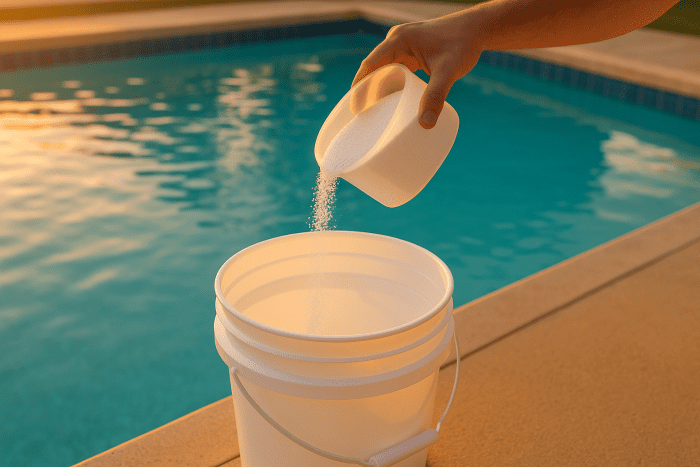
Fill a 5-gallon bucket with pool water. Add the calculated amount of sodium thiosulfate granules and stir until fully dissolved. This takes about 2-3 minutes.
Why pre-dissolve? Two reasons:
- Undissolved granules can bleach vinyl liners if they settle
- Pre-dissolving ensures even distribution
Step 4: Add to Pool with Pump Running
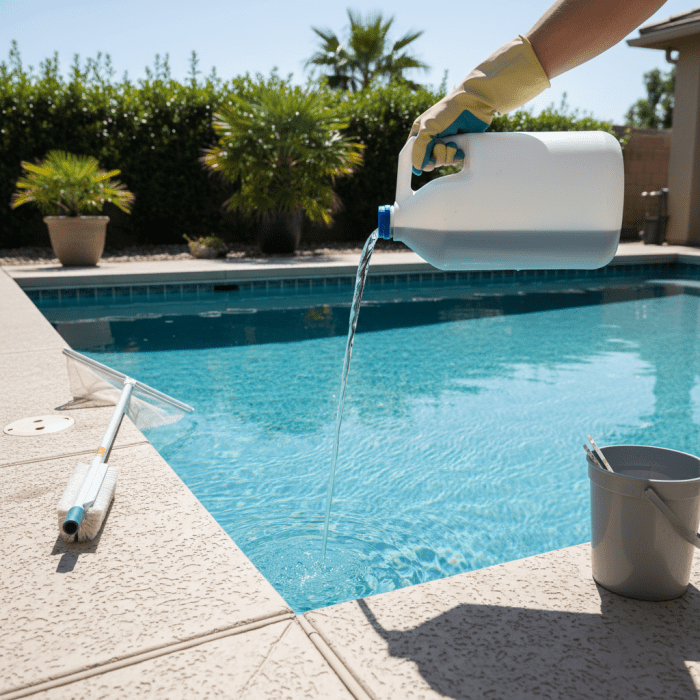
Pour the solution around the pool’s perimeter while walking, not in one spot. Keep the pump and filter running on the highest speed setting. This circulates the chemical throughout the entire water volume quickly.
Step 5: Wait and Retest
Give it 20-30 minutes. Don’t add more before retesting — the reaction needs time to complete throughout all 15,000+ gallons.
Test again. Still too high? Repeat with a smaller dose. On target? You’re done.
Step 6: Check pH and Adjust if Needed
After your chlorine is where you want it, test pH. If it dropped below 7.2, add some soda ash (sodium carbonate) to bring it back up. About 6 oz per 10,000 gallons raises pH by 0.2 points.
Product Types: Not All Sodium Thiosulfate Is the Same
You’ll find sodium thiosulfate sold in three main forms:
Granular (most common): White crystalline powder. This is what most pool supply stores sell and what the dosage calculations are based on. Look for products labeled “Chlorine Neutralizer” or “Dechlorinator.” The In The Swim Chlorine Neutralizer is a reliable option.
Pentahydrate crystals: Larger, clear crystals. Still effective but dissolves slower. Same dosage rate as granular.
Photo-grade (anhydrous): Very pure, used in photography developing. Works fine but costs more. No advantage for pool use.
Aquarium dechlorinators: Often contain sodium thiosulfate but at unknown concentrations mixed with other compounds. Avoid these for pools — you can’t calculate accurate dosing.
What to Do If You Add Too Much
Overdosed? Here’s what happens: your chlorine crashes to zero, and your pool becomes an all-you-can-eat buffet for algae and bacteria.
Immediate steps:
- Don’t panic. Your pool won’t turn green in 30 minutes.
- Check chlorine levels to confirm overdose (reading at or near 0 ppm).
- Partially drain and refill. Remove 10-20% of pool water and replace with fresh tap water. This dilutes the excess sodium thiosulfate.
- Wait 2-4 hours, then add chlorine normally.
Why waiting matters: Excess sodium thiosulfate will neutralize any chlorine you add immediately. By diluting it first, you reduce its concentration below the threshold where it can consume new chlorine.
How much to drain: There’s no perfect formula here because you don’t know exactly how much excess sodium thiosulfate is present. Start with 10% of your pool volume. If chlorine still won’t hold after 4 hours, drain another 10%.
For a stubborn overdose situation, you may need to raise chlorine very slowly over 2-3 days, adding small amounts and testing frequently until levels stabilize.
Factors That Affect Sodium Thiosulfate Performance
Water Temperature
Warmer water speeds up the reaction. In 85°F+ water, you’ll see results in 10-15 minutes. In 65°F water, give it the full 30 minutes before retesting.
Sunlight Exposure
Direct sunlight doesn’t significantly impact how sodium thiosulfate works, but it does help reduce chlorine naturally. On a sunny day, you might need slightly less neutralizer than calculated because UV is already doing some of the work.
High Cyanuric Acid Levels
When CYA is above 80 ppm, chlorine binds tightly to the stabilizer. This “bound” chlorine is harder for sodium thiosulfate to neutralize. You may need 10-20% more product than calculated for pools with high CYA.
Product Age and Storage
Sodium thiosulfate is stable but can absorb moisture over time. Store it in a sealed container in a cool, dry place. If your granules have clumped into hard chunks, they’re still usable but may take longer to dissolve.
Sodium Thiosulfate vs. Other Chlorine Reducers
| Method | Speed | Precision | Side Effects | Cost |
|——–|——-|———–|————–|——|
| Sodium Thiosulfate | Fast (20-30 min) | High (calculable) | Slight pH drop | Low (~$15 for 5 lbs) |
| Hydrogen Peroxide | Medium (1-2 hours) | Moderate | Adds oxygen, foaming possible | Medium |
| Ascorbic Acid (Vitamin C) | Fast (15-20 min) | Moderate | Significant pH drop | Higher |
| Sunlight (natural) | Slow (2-5 days) | None | None | Free |
| Partial Drain/Refill | Medium (depends on volume) | Low | Wastes water, affects all chemistry | Variable |
Sodium thiosulfate wins for most pool owners because it’s fast, predictable, and affordable. Ascorbic acid works well but tanks your pH more dramatically. Hydrogen peroxide is harder to dose accurately.
Frequently Asked Questions
How long does sodium thiosulfate stay active in pool water?
It doesn’t persist. Sodium thiosulfate reacts immediately with available chlorine and is then consumed in the process. Unlike chlorine stabilizer, it doesn’t remain in your water waiting to neutralize future chlorine additions. Once the reaction completes (typically 20-30 minutes), any excess sodium thiosulfate will gradually break down or get diluted.
Can I swim right after adding sodium thiosulfate?
Wait until you’ve retested and confirmed chlorine is between 1-3 ppm. The chemical itself isn’t particularly harmful at pool dosing levels, but you want to verify the treatment worked before jumping in.
Is sodium thiosulfate safe for saltwater pools?
Yes. It works exactly the same way in saltwater pools as traditional chlorine pools. Your salt cell generates chlorine, and sodium thiosulfate neutralizes it the same as if you’d added liquid chlorine. Just make sure to calculate based on your actual chlorine reading, not your cell’s output setting.
Will sodium thiosulfate damage my pool liner or equipment?
No, when used as directed. Pre-dissolving prevents granules from sitting on vinyl and potentially bleaching it. The reaction products (chloride ions and sulfates) are harmless at these concentrations. Heavy, repeated use over years could contribute to sulfate buildup, but occasional use is completely safe.
How often is it safe to use sodium thiosulfate?
As often as needed, but if you’re using it more than once a month, you’ve got a dosing problem to solve upstream. Figure out why your chlorine keeps spiking — tablet feeder too high, salt cell percentage wrong, or liquid chlorine measuring errors — and fix that instead.
Sources
- Clear Choice Pool Care – Sodium Thiosulfate for Pools – Detailed overview of sodium thiosulfate uses and safety
- In The Swim – How to Reduce Pool or Spa Chlorine Levels – Comparison of chlorine reduction methods
- Swim University – Pool Chlorine Neutralizer Guide – Practical application tips and product recommendations
- Halogen Supply – Sodium Thiosulphate Product Information – Technical specifications and dosing guidance
Get Your Pool Chemistry Right Every Time
Calculating sodium thiosulfate by hand works, but why make pool care harder than it needs to be? Our free Pool Chemical Calculator handles chlorine reduction, pH adjustment, alkalinity balancing, and more — all customized to your exact pool size and current readings. Bookmark it and stop second-guessing your chemical doses.
Recommended pool supplies
As an Amazon Associate, Pool Chemical Calculator earns from qualifying purchases.

Raises free chlorine quickly without adding stabilizer, which is useful when CYA is already high.
View on Amazon
Accurate readings make every chlorine, pH, alkalinity, calcium, and CYA dose safer.
View on Amazon
Protects chlorine from sunlight, especially in outdoor pools with low stabilizer.
View on AmazonGet exact pool chemical doses
Pool Chemical Calculator turns your test readings, pool volume, and target levels into exact treatment amounts for chlorine, pH, alkalinity, calcium, stabilizer, salt, and more.
Open the Pool Chemical Calculator app for iOS, Android, or web.